Source integrated scr cordierite sic dpf for cars, trucks, and buses
Compare 30 listings for integrated scr cordierite sic dpf designed for diesel exhaust purification. Buyers can evaluate specifications like cell density, thermal stability, and emission standards to find suitable components for automotive applications.
Key considerations
Products List






Comprehensive Sourcing Guide
Strategic Sourcing Guide for Integrated SCR Cordierite SiC DPF Systems
The global automotive industry is increasingly focused on reducing particulate matter emissions from diesel engines, driving a surge in demand for advanced filtration technologies. Among the most critical components in this ecosystem is the integrated Selective Catalytic Reduction (SCR) and Diesel Particulate Filter (DPF) system. Sourcing these components requires a nuanced understanding of material science, regulatory compliance, and supply chain reliability. This guide provides a comprehensive framework for buyers evaluating integrated SCR Cordierite Silicon Carbide (SiC) DPF units, ensuring that procurement decisions are grounded in verified technical specifications and market realities rather than unverified claims.
Technical Architecture and Material Composition
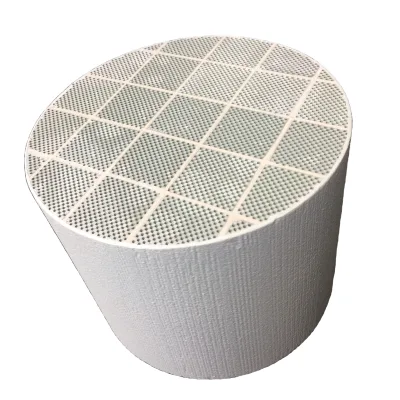
The core of a high-performance DPF lies in its substrate material and cellular structure. The supplied product data indicates a distinct preference for Cordierite and Cordierite Silicon Carbide composites. Cordierite is widely recognized for its thermal stability and low coefficient of thermal expansion, making it suitable for the harsh thermal cycling conditions of diesel exhaust systems. However, the inclusion of Silicon Carbide (SiC) represents a significant technological advancement. SiC offers superior thermal conductivity and mechanical strength compared to pure Cordierite, allowing for higher filtration efficiency and better resistance to thermal shock.
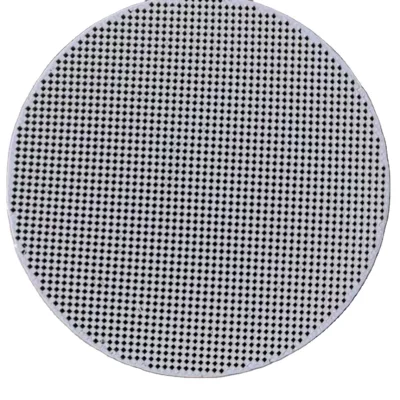
Buyers must verify the specific cellular density of the substrate, as this directly impacts backpressure and filtration efficiency. The observed market data lists cell densities ranging from 100 cpsi to 600 cpsi, with specific mentions of 200 cpsi, 300 cpsi, 400 cpsi, and 600 cpsi configurations. The choice of density depends on the engine type and emission requirements. For instance, a 400 cpsi configuration is often cited as a standard for balancing flow and filtration, while higher densities like 600 cpsi may be required for stricter emission standards. The physical shape of the component is also a critical variable; while round shapes are common, the data also notes oval and racetrack profiles to accommodate specific under-hood packaging constraints.
Furthermore, the integration of the SCR function implies that the component must house both the particulate filtration media and the catalyst washcoat necessary for nitrogen oxide reduction. The product attributes confirm applications in both gasoline and diesel engines, though the primary focus for DPF technology remains on diesel exhaust purification. The component is described as a "refractory" ceramic part, emphasizing its ability to withstand high temperatures without degrading.
Regulatory Compliance and Emission Standards
Navigating the complex landscape of global emission standards is a primary challenge for procurement teams. The product data explicitly references a wide spectrum of discharge and emission standards, including Euro I, Euro II, Euro III, Euro IV, Euro 5, and Euro 6, alongside OBD (On-Board Diagnostics) requirements. This breadth suggests that the market offers solutions tailored to various regulatory environments, but it also necessitates rigorous verification.
When sourcing an integrated SCR Cordierite SiC DPF, buyers must ensure the component is certified for the specific jurisdiction where the vehicle will operate. A unit compliant with Euro IV standards may not suffice for a vehicle destined for a market requiring Euro 6 compliance. The data mentions a specific "Discharge Standard: Euro IV" for certain listings, while others list a broader range up to Euro 6. This variation highlights the importance of matching the component's certification to the vehicle's homologation requirements.
Certification verification is equally critical. The observed data includes references to ISO TS (likely referring to ISO/TS 16949 or similar automotive quality standards) and ISO CE certifications. Buyers should demand documentation proving that the specific batch of components meets these standards. It is not sufficient to rely on a general claim; the certification must be traceable to the specific model number, such as the "SF-DPF" or "universal Catalytic Converter 400" models observed in the market. Without valid certification, the component cannot be legally installed on vehicles intended for public roads in regulated markets.
Cost Drivers and Pricing Dynamics
The pricing of integrated SCR Cordierite SiC DPF systems is influenced by several factors, including material costs, manufacturing complexity, and certification status. The observed price range in the market spans from $1 to $5,000 USD. This wide variance reflects the diversity of products available, from simple filter elements to fully integrated, complex catalytic converter assemblies.
Several key drivers influence where a specific unit falls within this range. First, the material composition is a primary cost factor. Pure Cordierite substrates are generally less expensive than Cordierite-SiC composites, which require more advanced manufacturing processes to achieve the desired thermal and mechanical properties. Second, the cell density plays a role; higher cell densities (e.g., 600 cpsi) often command a premium due to the precision required in their production. Third, the level of integration matters. A standalone DPF is typically less costly than an integrated unit that combines the filter with the SCR catalyst and housing, as the latter involves more complex assembly and testing.
Minimum Order Quantity (MOQ) is another significant cost driver. The observed MOQ range is between 1 and 1,000 units. Buyers purchasing in small quantities (MOQ 1-10) may face higher per-unit costs compared to those ordering in bulk (MOQ 100-1000). Additionally, the origin of the product, specifically from regions like Shandong, China, can influence logistics costs and tariffs, which should be factored into the total cost of ownership. Buyers should also consider the warranty terms, with some suppliers offering a 2-year warranty, which can mitigate long-term risk and affect the initial purchase price.
Typical Applications and Vehicle Compatibility
The versatility of integrated SCR Cordierite SiC DPF systems allows them to be applied across a wide range of automotive sectors. The product data identifies applications in "Automotive/Vehicle Exhaust Emissions" and specifically for "Diesel exhausts purification." This confirms their primary use in diesel-powered vehicles, including light-duty trucks, heavy-duty commercial vehicles, and off-road machinery.
The data notes that the component is suitable for both Gas and Diesel engine types, though the DPF function is inherently tied to diesel particulate control. The "Universal Catalytic Converter 400" model suggests that some units are designed to fit a broad range of vehicle models, while others, such as the "SF-DPF," may be tailored for specific applications. The car model compatibility is often listed as "Depends on different model product," indicating that buyers must cross-reference the component dimensions and mounting points with their specific vehicle requirements.
Physical dimensions are a critical factor in application. The observed size specifications include various combinations such as 190200mm, 286305mm, 224305mm, 240305mm, 320430mm, and 144152.4mm. These dimensions dictate the physical space required in the vehicle's exhaust system. Buyers must ensure that the selected component fits within the available chassis space without interfering with other components. The shape, whether round, cylinder, oval, or racetrack, must also align with the vehicle's exhaust routing.
Supplier Evaluation and Quality Assurance
Evaluating suppliers for high-performance ceramic components requires a focus on technical capability and quality control systems. The data indicates that the primary production origin is China, with specific mentions of Shandong as a manufacturing hub. While this provides a clear geographic context, buyers must look beyond location to assess the supplier's technical competence.
Key evaluation criteria should include the supplier's ability to provide detailed technical data sheets, including thermal stability ratings and mechanical strength test results. The data mentions a thermal stability of 800°C with a performance metric of "Greater Than or Equal 3," though the specific nature of this metric requires clarification from the supplier. Buyers should request third-party test reports to verify these claims. Additionally, the supplier's adherence to quality standards, such as ISO certifications, should be verified through valid documentation.
Packaging is another indicator of supplier professionalism. The observed packing methods include wooden boxes, carton boxes with pallets, and cartons with pallets. Proper packaging is essential to prevent damage to the fragile ceramic substrates during transit. Buyers should inspect the packaging specifications to ensure they meet the rigors of international shipping. The condition of the product is listed as "New," which is a baseline requirement, but buyers should also verify the supplier's process for handling and storing inventory to prevent degradation before shipment.
Long-Term Procurement and Maintenance Considerations
Sourcing integrated SCR Cordierite SiC DPF systems is not merely a transactional event but a long-term commitment. The 2-year warranty observed in the market suggests that suppliers are confident in the durability of their products, but buyers must understand the terms and conditions of this warranty. Does it cover material defects, or does it also include performance degradation? Understanding these distinctions is crucial for risk management.
Maintenance and replacement cycles are also important considerations. The high thermal stability and mechanical strength of SiC materials generally result in longer service life compared to traditional materials, but the frequency of regeneration cycles and the potential for clogging must be managed. Buyers should inquire about the supplier's support for regeneration protocols and the availability of replacement parts. The "Customization: Available" attribute indicates that suppliers may offer tailored solutions, which can be beneficial for specialized applications but may impact lead times and costs.
Finally, buyers should consider the supply chain resilience. With a lead time and production capacity that can vary, it is essential to establish a reliable relationship with the supplier. The ability to scale orders from 1 unit to 1,000 units suggests flexibility, but buyers should confirm the supplier's capacity to handle large volume orders without compromising quality. Regular audits and performance reviews can help ensure that the supplier continues to meet the evolving demands of the automotive industry.
Summary of Key Specifications and Standards
To facilitate quick reference during the sourcing process, the following table summarizes the key technical and compliance attributes observed in the market for integrated SCR Cordierite SiC DPF systems.
| Attribute Category | Observed Values / Options | Verification Requirement |
|---|---|---|
| Material | Cordierite, Cordierite Silicon Carbide | Verify composition ratio and purity |
| Cell Density | 100, 200, 300, 400, 600 cpsi | Match to engine backpressure requirements |
| Shape | Round, Oval, Racetrack, Cylinder | Confirm fitment with vehicle chassis |
| Emission Standards | Euro 1 through Euro 6, OBD | Must match target market regulations |
| Certifications | ISO TS, ISO CE | Request valid certificate copies |
| Thermal Stability | 800°C (Metric ≥ 3) | Request specific test data |
| Dimensions | 144x152mm to 320x430mm | Verify against vehicle exhaust layout |
| Warranty | 2 Years | Review terms and exclusions |
| Origin | China (Shandong) | Assess logistics and tariff implications |
By adhering to these guidelines and rigorously verifying the provided data points, buyers can navigate the complex market for integrated SCR Cordierite SiC DPF systems with confidence. The focus on technical specifications, regulatory compliance, and supplier reliability ensures that the procurement process yields high-quality components that meet the demanding standards of modern diesel emission control.
FAQs
What materials are used for integrated SCR Cordierite SiC DPF?
The components are primarily made from Cordierite and Cordierite Silicon Carbide composites. These materials provide the necessary thermal stability and mechanical strength required for diesel exhaust purification in harsh operating conditions.
Which emission standards do these products support?
Products support a wide range of standards including Euro 1 through Euro 6 and OBD requirements. Specific listings may also cite Euro IV as a discharge standard, ensuring compliance for various global regulatory environments.
Can buyers customize the cellular density of the filter?
Yes, customization is available for cellular density ranging from 100 to 600 cpsi. Common configurations include 200, 300, 400, and 600 cpsi to balance filtration efficiency with exhaust flow backpressure.
How is the product packaged for international shipping?
Items are typically packed in wooden boxes, carton boxes with pallets, or standard cartons with pallets. This packaging ensures the fragile ceramic substrates are protected during transit from the origin in China.
What warranty terms are available for these components?
A 2-year warranty is offered for the new condition products. This coverage helps mitigate long-term risks associated with material defects or performance degradation in automotive and diesel exhaust applications.
Which engine types are compatible with this technology?
The components are designed for both Gas and Diesel engine types. While applicable to general automotive exhaust emissions, the primary function focuses on diesel exhaust purification and particulate matter reduction.
What are the typical dimensions for these catalytic converters?
Sizes vary significantly, including dimensions like 190x200mm, 286x305mm, and 320x430mm. Buyers must verify specific sizes against their vehicle chassis to ensure proper fitment and routing.